

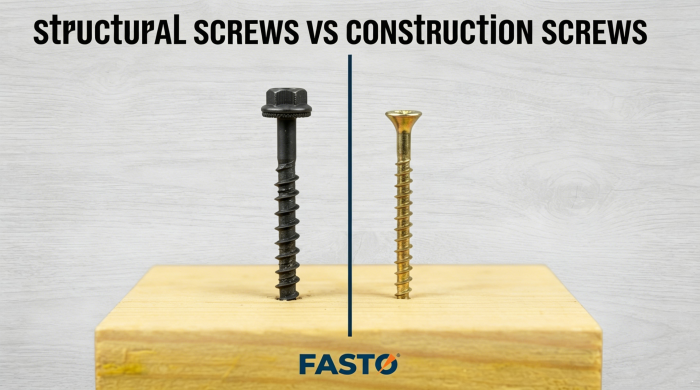


Why Is the Flange Bolt Replacing the Traditional Bolt-and-Washer Duo in High-Vibration Industries?
I was walking through an automotive chassis assembly plant in Wenzhou last week, observing a robotic arm struggle with a tray of loose flat washers. Every few minutes, a washer would misalign or slip, halting a multi-million dollar line. The plant manager pointed to a bin of traditional hex bolts and sighed, "That’s the sound of 15% of our efficiency leaking away." He was right. In modern high-speed manufacturing, the "bolt-plus-separate-washer" assembly is increasingly seen as a relic—a liability that invites human error and slows down the cadence of the production floor.
The mechanical brilliance of the flange bolt lies in its ability to manage "bearing pressure." When a standard bolt is torqued, the force is concentrated in a narrow ring directly under the head. On softer materials like aluminum or composite brackets, this can lead to surface indentation or "crush," which eventually causes the joint to lose its pre-load. By extending the head into a flange, the pressure is dissipated. According to ISO 4162 specifications, this increased bearing surface ensures that even under high-tensile loads (typically Grade 8.8 or 10.9), the integrity of the joined material remains uncompromised, preventing the "settling" that often precedes fastener failure.
The technical decision-making process further splits into two distinct paths: Serrated versus Non-serrated flanges. Non-serrated flange bolts provide a smooth bearing surface, ideal for protecting finished or painted surfaces while maintaining a high clamping force. However, in high-vibration environments like engine mounts or industrial agitators, "Serrated" flange bolts are the gold standard. The teeth on the underside of the flange bite into the substrate, creating a mechanical lock that resists back-off. It is a one-way security system: it goes in easy but resists loosening with twice the force of a standard fastener.

At Fasto Industrial Co., Ltd., we treat the flange diameter and concentricity as the "vital signs" of the bolt. A flange that is even slightly off-center creates an uneven load distribution, which is the primary cause of fatigue cracks in structural joints. Our production lines for EN 1665 compliant bolts utilize advanced cold-heading technology to ensure the grain flow of the steel follows the contour of the flange. This metallurgical continuity ensures that the "Two-in-One" design doesn't just save time—it provides a structural strength that separate components can never match.
The industry impact of adopting flange bolts is a masterclass in "Lean" procurement. By switching to a single-component solution, companies are cutting their SKU count in half, reducing the "hidden costs" of sourcing, inspecting, and storing millions of individual washers. As the global supply chain moves toward more automated and failure-proof assemblies, the flange bolt has moved from a specialty item to a mandatory standard. In the world of high-stress structural engineering, it is the most efficient way to turn a two-step assembly into a single, unbreakable connection.

Contact Us for high quality flange bolt:
E mail :info@fastoscrews.com
Whatsapp:+8615594860638