


What is the Difference Between Machine Screws and Sheet Metal Screws?
What are Machine Screws?
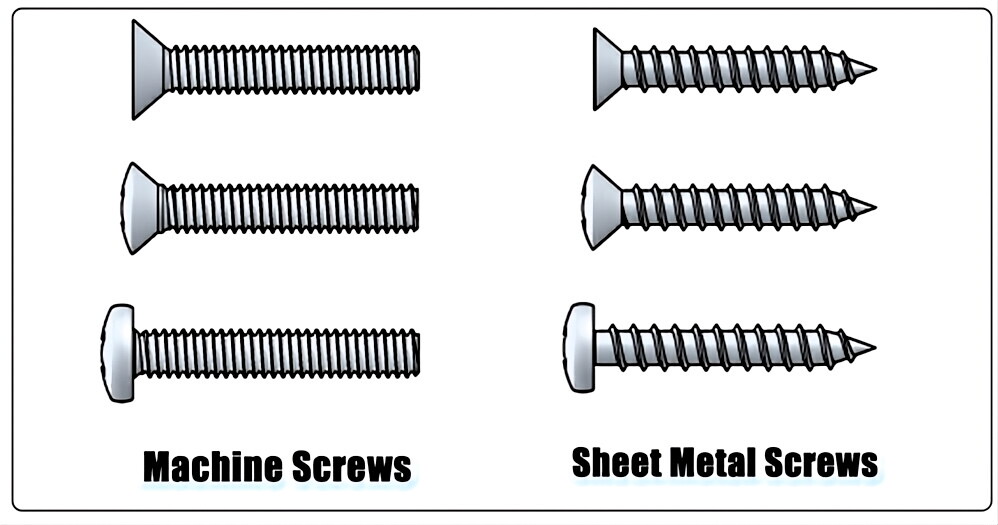
Machine screws are threaded fasteners designed to be used with a tapped hole or nut. They feature a uniform diameter along the entire length of the shaft and are typically used to fasten metal parts together. Machine screws are available in a wide range of sizes, materials, and head styles, making them versatile for different applications.
Characteristics of Machine Screws
1. Thread Type: Typically have a uniform thread along the entire length or part of the shank (the part of the screw below the head). They are designed to be used with a pre-tapped hole or in conjunction with a nut. The threads on machine screws are finer and more precise, which allows for a tighter fit when used with a nut or tapped hole.
2. Head Styles: Machine screws come in various head styles, including flat (countersunk), round, pan, hex, and others, depending on the intended use and the type of drive required (slotted, Phillips, Allen, etc.).
3. Materials: These screws are manufactured from materials such as stainless steel, brass, and steel, offering corrosion resistance and strength for demanding environments.
4. Installation: Machine screws generally require a pre-drilled and tapped hole or a nut to secure them in place.
Applications of Machine Screws
Machine screws are commonly used in applications such as machinery, appliances, electronic devices, and automotive components. Their ability to create durable and reliable connections in metal parts makes them ideal for industrial and commercial settings.
What are Sheet Metal Screws?
Sheet metal screws, as the name suggests, are specifically designed for fastening metal sheets, as well as other materials such as plastic and wood. These screws feature a sharp, self-tapping thread that allows them to create their own mating threads in the material they are being driven into.
Characteristics of Sheet Metal Screws
1. Thread Type: Have a sharp point and threads that run the entire length of the screw. These threads are coarser and deeper than those of machine screws. Sheet metal screws are self-tapping, meaning they can cut their own mating threads into softer materials like sheet metal, wood, or plastic as they are driven in.
2. Point Styles: These screws are available with different point styles, including sharp, blunt, and self-drilling points, catering to various material thicknesses and hardness.
3. Materials: Sheet metal screws are commonly made from materials such as stainless steel, carbon steel, and aluminum, providing options for corrosion resistance and strength.
4. Installation: Sheet metal screws can often be installed directly into the material by driving them into a pilot hole or even directly into the material without a pilot hole, depending on the thickness and hardness of the material.
Applications of Sheet Metal Screws
Sheet metal screws find widespread use in industries such as construction, HVAC (heating, ventilation, and air conditioning), automotive, and general fabrication. Their ability to securely fasten thin materials makes them indispensable in applications where traditional machine screws may not be suitable.
Feel free to contact us for a FREE Quote or more information!
• Michelle
• WhatsApp:+8619829729659
• Email: info@fasto.cn
